A selection of work focused on bringing structure to creative teams, improving workflows, and helping things run more smoothly.
Case study 1: Rebrand Rollout
Managing the cross-functional Animoto rebrand at scale
Overview
Animoto underwent a full visual rebrand that spanned nearly two years, from early research through final rollout. I was involved throughout the process, and as we approached launch, I led coordination of the rebrand across marketing channels while balancing ongoing campaigns and day-to-day work.
The Challenge
The rebrand touched nearly every part of the business:
Hundreds of assets needed to be updated across email, web, social, and paid media
Multiple teams were involved, including Marketing, Product, and our external creative agency
Work needed to stay aligned while still supporting ongoing campaigns
There was no pause point, as both rebrand and day-to-day work had to move forward simultaneously
The biggest challenge was maintaining clarity across a large volume of moving pieces without slowing execution.
What I Did
Built and managed centralized tracking systems to monitor progress across assets and channels
Created clear timelines and workbacks, aligning teams on priorities and dependencies
Coordinated across Marketing, Product, and external agency to maintain consistent communication
Supported asset reviews and approvals, ensuring alignment with new brand standards
Helped ensure all rebranded assets were organized and accessible in Figma
Balanced rebrand execution alongside ongoing campaigns and initiatives
Impact
Successfully rolled out the rebrand across channels without disrupting ongoing marketing efforts
Maintained alignment across cross-functional teams during a complex initiative
Reduced confusion and rework by improving visibility into asset status and ownership
Delivered a consistent and cohesive brand experience across touchpoints
Why it worked
Large projects like this aren’t just about timelines, they’re about clarity. When teams understand what’s changing, what’s expected, and where things stand, everything moves more smoothly.
Overview
As project volume grew across marketing and product teams, inconsistent intake and workflows created delays and unnecessary back-and-forth. I led efforts to bring more structure and clarity to how work was requested, prioritized, and executed.
The Challenge
Requests came in through different channels and formats
Priorities weren’t always clear
Workload was difficult to assess across the team
Processes relied heavily on manual coordination
This made it harder to plan effectively and keep projects moving.
What I Did
Collaborated with our external agency and built a structured intake form in Asana to standardize requests
Partnered with teams to ensure requests included the right level of detail upfront
Designed and implemented Jira automations to streamline project flow
Introduced story point estimation, aligning the team on effort sizing
Established clearer processes for prioritization and tracking
Impact
Improved team efficiency by ~50%
Reduced back-and-forth during intake and project kickoff
Increased visibility into workload and priorities
Minimized feedback loops and enabled more consistent project execution
Why it worked
Most workflow challenges aren’t about tools, they’re about clarity. When teams share an understanding of priorities and effort, everyone is on the same page and projects are completed more efficiently.
Case study 2: Workflow Optimization
Improving team efficiency through workflow design
Case study 3: Template library
Scaling Animoto’s video template library through structure and data
Overview
Animoto’s template library is a core part of the product experience. I led efforts to organize, scale, and improve performance across the library, helping grow it from 400 to 700+ templates while making it more usable, strategic, and impactful.
The Challenge
The template library had strong potential, but there was an opportunity to make it a more intentional and strategic part of the user experience:
Content wasn’t always structured around user needs or use cases
Performance varied across templates
There wasn’t a clear system guiding what should be created next
The library wasn’t fully leveraged as a driver of user engagement and conversion
What I Did
I focused on building structure and using data to guide decisions:
Organized the template library by use case and seasonality, improving discoverability and usability
Analyzed performance data across templates, including finalization rates and conversion trends, to identify what was working
Used those insights to guide template creation priorities and strategy
Identified an opportunity to elevate the library as a more strategic part of the product experience and marketing funnel
Supported and contributed to template production, ensuring alignment with user needs and brand standards
Used AI to generate SEO-friendly descriptions, keywords, and metadata, improving discoverability
Maintained consistency across structure, categorization, and asset organization
Impact
Expanded the library from 400 to 700+ templates in a single year
Improved performance, with newer templates reaching 40%+ finalization vs <20% for legacy content
Created a more intuitive and structured user experience
Shifted template creation toward a more data-informed and strategic approach
Why it worked
Scaling content isn’t just about creating more, it’s about creating the right things. By combining structure with performance insights, I focused on making the library more intentional, useful, and aligned with how users actually engage with the product.
Case study 4: A/B Testing & Documentation
Standardizing A/B testing and performance measurement
Overview
A/B testing was being used across campaigns, but execution and measurement weren’t always consistent. I created documentation and processes to standardize how tests were set up, executed, and evaluated.
The Challenge
Test setup varied depending on who was running it
Key details were sometimes inconsistent or missing
Measurement and reporting weren’t always aligned
Learnings weren’t easily reusable
What I Did
Created documentation for A/B testing in Blueshift and Sanity CMS
Standardized how tests were defined, including variables and success criteria
Built guidelines for tracking and evaluating performance
Used AI to summarize results and simplify insights
Integrated testing into broader campaign workflows
Impact
Improved consistency in how A/B tests were executed and measured
Made testing easier to scale across campaigns
Reduced ambiguity in results and insights
Supported more data-informed decision-making
Why it worked
Testing only works if it’s consistent and repeatable. Clear systems make it easier for teams to learn and apply insights over time.
A collection of projects spanning video production, graphic design, and creative strategy. Each piece represents a problem solved, a story told, or a system built.
Video production
From product tutorials to feature announcements to branded social content, I concept, script, produce, and edit video from start to finish.
The Lemon City Collective took part in the Custom Video Makeover Pilot I conducted during my time at Animoto. I used their website as a starting point and was able to incorporate their branding smoothly. I created a series of videos, from introducing the business to featuring their team, therapies and offerings.
Following the look and feel of the CDKL5 in Color Podcast, I was able to mimic the playfulness of the brand, while introducing the speakers and the purpose of their podcast.
This is a typical tutorial for Animoto once a new product feature was announced. I aligned the voiceover with the company branding and visuals to create an easy to follow how-to video.
Graphic design
Email campaigns, website assets, paid ads, and brand materials—designed with purpose, grounded in performance, and built for consistency at scale.
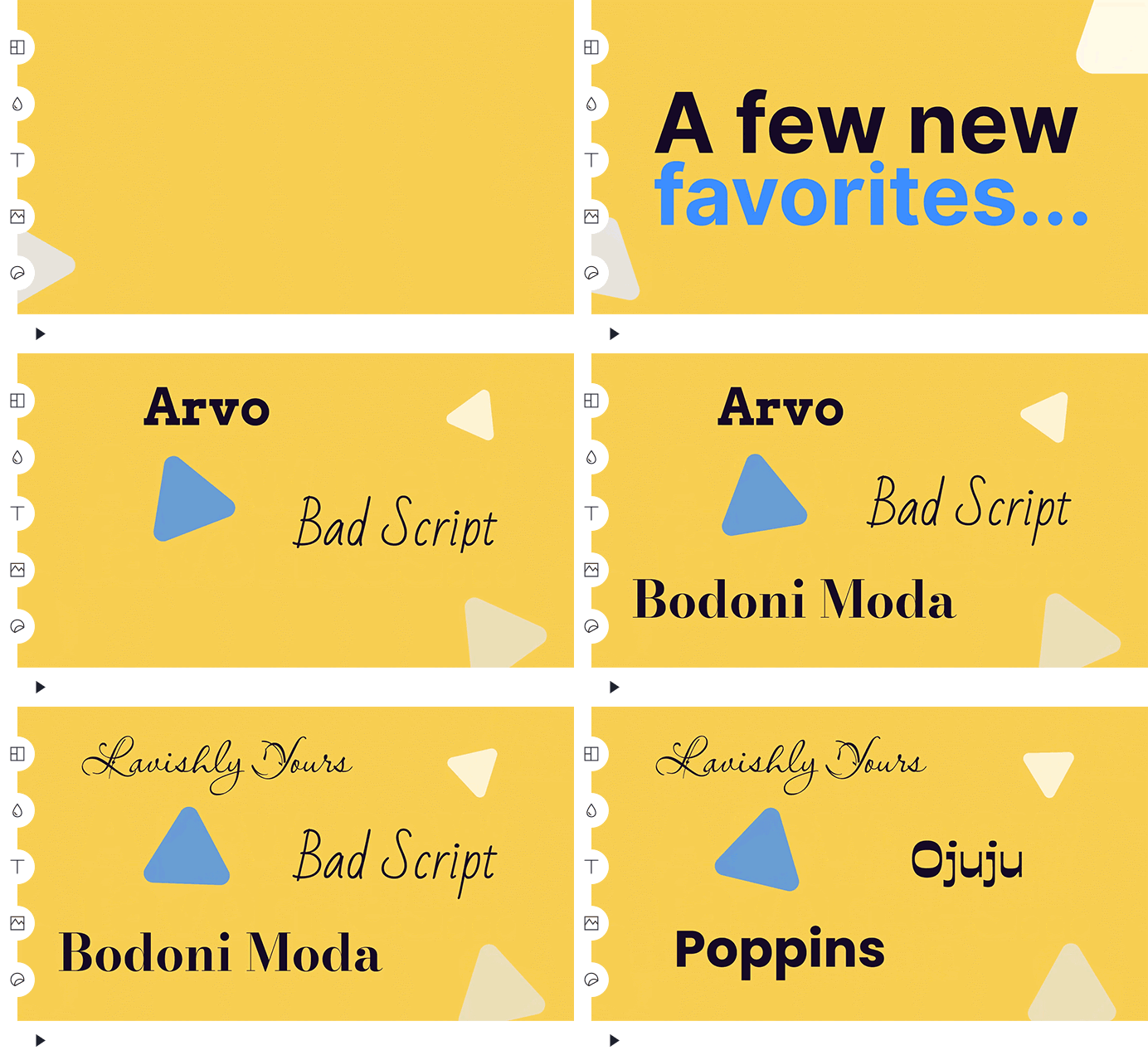
Video templates
In 2025, I created 274 new video templates—nearly 3x the prior year's output—guided by usage data, A/B testing, and a focus on ease of use and completion rates. Here's a look at some favorites.
The Goals and Vision template was created for businesses to announce their strategy for the upcoming year, either internally or to their stakeholders.
The Meet the Team template is a colorful and engaging video meant to draw attention, and introduce a specific team to new clients.
Intended for non-profits, but easily adapted for any business, this Fiscal Year Recap template provides a design to show off impressive stats.
An example of a consumer template, the Graduation Tribute Slideshow is playful which aligns nicely with the congratulatory messaging.
Let's connect
I’m currently open to new opportunities in marketing project management and creative operations. If you’re building a team that values structure, creativity, and people who like to make things run better, I’d love to connect.